Your Client Onboarding Process Is Broken If You're Doing These 5 Things
Dec 28, 2025
You know that sinking feeling when a new client signs your contract, you get excited, and then... the whole onboarding goes sideways? They don't send documents on time. They ask the same questions you've already answered. You're stuck in email ping-pong for weeks trying to get them set up. Eventually you wonder if it would've been faster to just drive to their house and collect everything yourself.
If this keeps happening, it's not the clients. It's your onboarding process.
I know that's hard to hear, but stick with me. Most solo bookkeepers are making the same five mistakes that turn what should be a smooth 1-2 week onboarding into a drawn-out nightmare. The good news? Once you know what these mistakes are, they're easy to fix.
I'm going to walk you through the five things that are breaking your client onboarding process. If you're doing even one or two of these, you're making your life harder than it needs to be. By the end of this post, you'll know exactly what to stop doing and what to do instead so your next client onboarding actually works.
You're Waiting Too Long to Send the First Email
This is the biggest mistake I see bookkeepers make, and it kills momentum before you even get started.
A client signs your contract, and you think, "Great! I'll reach out in a few days once I wrap up this reconciliation." Or maybe you send a quick "Thanks for signing! I'll be in touch soon" email and then... nothing for three or four days.
Here's what's happening on the client's side: they just made a big decision. They're excited. They're relieved. They're ready to hand this mess over to you. And then you go silent. That excitement dies. They start wondering if you forgot about them. They move on to other priorities. By the time you finally send your "here's what I need" email, they're already mentally checked out.
Worse, when you wait too long, clients assume they're supposed to wait for you. They don't know if they should be doing something or if you'll tell them what to do. So they do nothing. And you're stuck wondering why they're not responding.
The fix is simple: send your welcome email within 24 hours of contract signing. Same day if possible. This email doesn't have to be complicated—it just needs to reassure the client, outline what happens next, and set expectations for the coming weeks. When you do this, you keep the momentum going and you stay in control of the process.
If you're waiting more than 48 hours to reach out after a contract is signed, you're letting your onboarding process break before it even starts.
You're Asking for Everything at Once
Picture this: you send an email to your new client with a list of 25 documents you need. Bank statements, credit card statements, tax returns, EIN letter, articles of incorporation, payroll reports, sales tax returns, loan docs, A/R aging, A/P aging, previous QuickBooks file... the list goes on.
The client opens that email, skims it, feels their chest tighten, and thinks, "I don't even know where half of this stuff is." They close the email. They tell themselves they'll tackle it this weekend. The weekend comes and goes. You follow up. They apologize and promise to get it to you "soon." Weeks pass.
When you dump everything on a client at once, you're overwhelming them. Most business owners aren't organized like you are. They don't have a filing system. They're not sure what "A/R aging report" means or where to find their EIN letter. So instead of tackling the list bit by bit, they freeze.
The better approach? Break it into stages. Send a welcome email that sets expectations. A day or two later, send a focused document request that separates "everyone needs these" from "only if this applies to you." Give them one clear deadline for the essentials, and let them know you'll work together to track down anything they can't find.
When you make the ask feel manageable, clients actually follow through. When you bury them in requests, they shut down.
You're Not Giving Real Deadlines
"Send me your documents when you get a chance."
"Just reply whenever you have time."
"No rush—get it to me when you can."
Every time you say something like this, you're training your client to de-prioritize you. Because if there's no deadline, there's no urgency. And if there's no urgency, your onboarding request is going to sit at the bottom of their to-do list forever.
I get it—you don't want to come across as demanding or pushy, especially with a brand-new client. But here's the thing: clients actually want structure. They want to know what's expected and when. When you give them a specific deadline, you're giving them permission to prioritize you over all the other noise in their inbox.
Instead of "when you get a chance," try "Please send me what you have by Friday, January 10th." Specific date. Clear expectation. No wiggle room.
And if they miss it? You follow up. Not with a passive "just checking in" email, but with a direct "I didn't receive the documents yet—are you running into any issues? Let me know how I can help."
When you set real deadlines and hold clients accountable to them (kindly but firmly), onboarding moves faster. When you leave it open-ended, you'll be chasing people for weeks.
You're Assuming Clients Know What You're Talking About
You've been doing bookkeeping for years. Terms like "Chart of Accounts," "undeposited funds," and "accrual basis" are second nature to you. But to your client? They might as well be speaking another language.
When you send an email asking for their "most recent A/R aging report," they're Googling what that means. When you mention their "EIN letter," they're wondering if that's the same thing as their business license. When you reference "previous QuickBooks file," they're panicking because they've never even opened QuickBooks.
And instead of asking you what these things mean (because they don't want to look dumb), they just... don't respond. Or they send you the wrong documents and you have to go back and forth three more times to get what you actually need.
This breaks your onboarding process in two ways: it slows everything down, and it makes the client feel incompetent. Neither is good for your working relationship.
The fix? Explain things in plain language. Instead of "send me your A/R aging report," say "send me a list of who owes you money." Instead of "I need your most recent 941," say "I need your quarterly payroll tax form—it's called a 941 and your payroll company should have it."
When you make it easy for clients to understand what you're asking for, they can actually give it to you. When you use jargon without explanation, you create confusion and delay.
You're Winging It Instead of Using a System
Here's the most common mistake of all: every time you onboard a new client, you're reinventing the wheel.
You write a custom welcome email from scratch. You forget to ask for the sales tax login until three weeks in. You send the kickoff call invite at a random time instead of following a predictable sequence. You're making it up as you go, and it shows.
This causes two major problems. First, it eats up your time. Every new client becomes a mental puzzle of "what do I need to send them next?" instead of a repeatable process you can execute in your sleep. Second, things fall through the cracks. You forget to mention an important deadline. You send the wrong email at the wrong time. The client gets confused because the experience isn't consistent.
The solution is to build a system and stick to it. Use the same email templates for every client. Send them in the same order, at the same intervals, every single time. Welcome email goes out immediately. Document request goes out 1-2 days later. Kickoff call invite goes out after you receive their documents.
When you have a system, you save time, you look professional, and nothing gets forgotten. When you're winging it, you're leaving room for things to go wrong—and they will.
Set up your templates once, save them in your email drafts or client management software, and use them for every single client. That's how you turn onboarding from a chaotic scramble into something that runs smoothly every time.
How Does This All Feel?
The 5 things breaking your onboarding process:
- Waiting too long to send the first email after contract signing
- Asking for everything at once instead of breaking it into stages
- Not giving clients real deadlines with specific dates
- Assuming clients understand bookkeeping jargon and terminology
- Winging it every time instead of using a repeatable system
What happens when you fix these mistakes:
Your clients stay engaged instead of disappearing. They send you documents on time because they know what you need and when you need it. They feel confident working with you because you've made the process clear and manageable. And you stop wasting hours chasing people, rewriting emails, and wondering why onboarding is always such a disaster.
If you've been doing even two or three of these things, your onboarding process has been working against you. But now you know what to stop doing and what to do instead.
The question is whether you're going to keep struggling with broken onboarding or actually fix it.
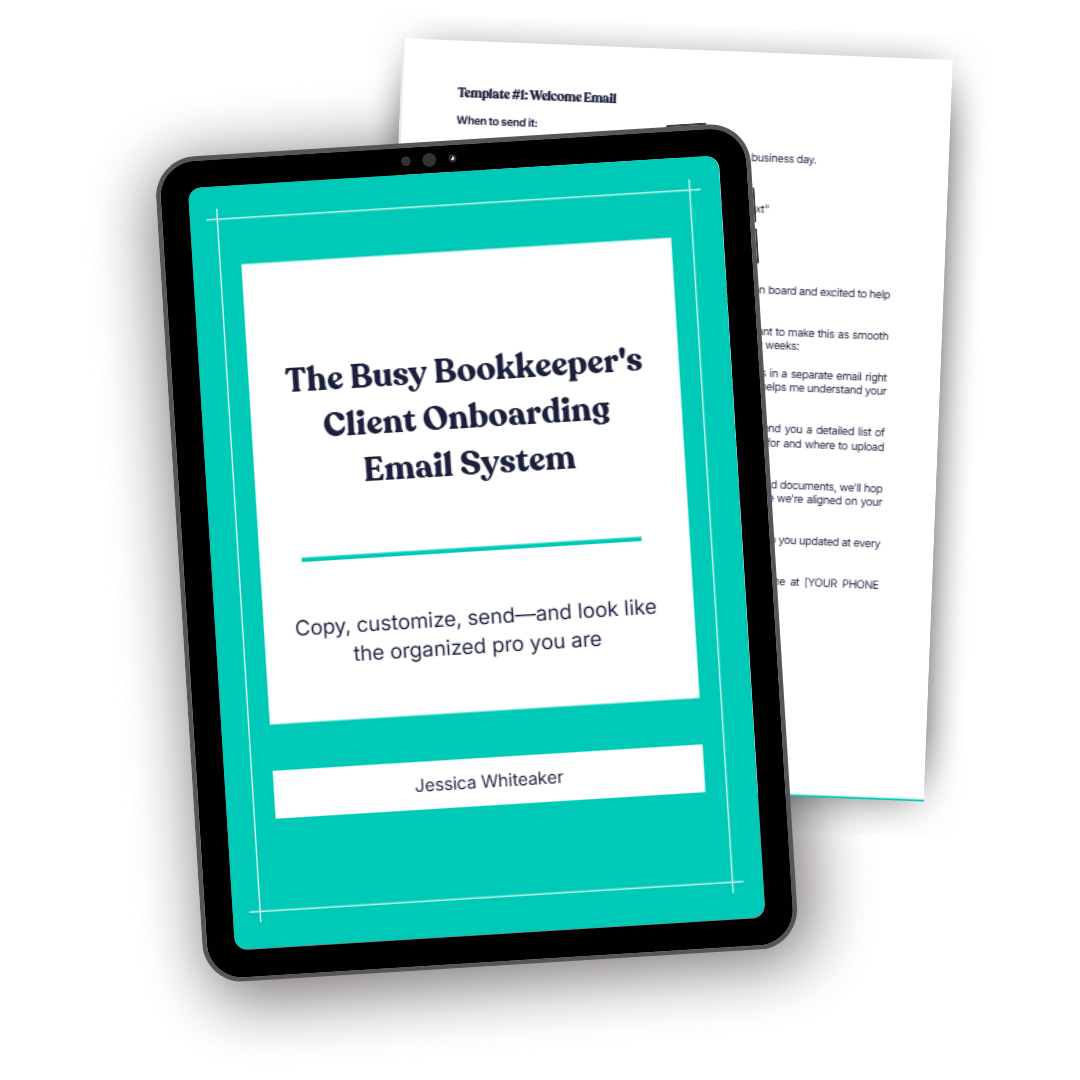
Want the exact email templates that eliminate all five of these mistakes? Download "The Busy Bookkeeper's Client Onboarding Email System" and get the welcome email, document request, and kickoff call invite ready to use with your next client.