The Client Onboarding Mistake That's Costing You Referrals
Dec 28, 2025
You do great work. Your clients' books are clean, their reports are accurate, and you've saved more than one business owner from a tax nightmare. So why aren't you getting referrals?
You'd think happy clients would be sending people your way left and right. But the referrals aren't coming. Or maybe you get one here and there, but nothing like what you'd expect given how hard you work and how much value you provide.
Here's the thing: the quality of your bookkeeping work isn't what determines whether clients refer you. It's how they feel about working with you. And that feeling gets locked in during onboarding—before you've even touched their books.
There's one specific mistake that bookkeepers make during client onboarding that quietly kills referrals. It's not dramatic. You won't even realize it's happening. But it's costing you new business every single month.
I'm going to show you exactly what this mistake is, why it's sabotaging your referrals even when clients are happy with your work, and how to fix it so clients actually want to send people your way. By the end of this post, you'll understand why referrals have been so hard to come by—and what to do about it.
The Mistake Is Making Clients Work Too Hard During Onboarding
Here's the mistake in one sentence: you're making your onboarding process about what's convenient for you instead of what's easy for your client.
This shows up in a dozen small ways. You send vague emails that force clients to figure out what you need. You ask them to track down 20 documents without explaining where to find half of them. You don't respond for three days, then expect them to drop everything when you finally reach out. You change the plan midway through without warning. You forget to mention an important deadline until it's already passed.
None of these things are deal-breakers on their own. Clients will still work with you. They'll still pay you. They might even be thrilled with the final result once their books are clean and organized.
But they won't refer you.
Why? Because onboarding is exhausting for them. It takes too much mental energy. Too much back-and-forth. Too much guessing. And when someone asks them, "Hey, do you have a good bookkeeper?" their brain immediately goes back to that onboarding experience. They remember the confusion and the hassle, and they think, "I mean, she's good at bookkeeping, but getting started was kind of a pain."
That hesitation is all it takes. They don't actively bad-mouth you. They just... don't send the referral.
The clients who refer you enthusiastically aren't just the ones whose books you've perfected. They're the ones who had an easy, smooth, professional experience from day one. The ones who thought, "Wow, this person has their act together. I want everyone I know to work with them."
If your onboarding feels like work for the client, you're not getting referrals. Period.
Clients Judge Your Professionalism Before You Touch Their Books
Most bookkeepers think clients refer them based on the quality of their technical work. Clean books, accurate reports, tax prep that goes smoothly. And yes, that matters.
But here's what actually drives referrals: clients refer bookkeepers who make them feel taken care of.
And that feeling doesn't come from a perfectly categorized Chart of Accounts. It comes from how you made them feel during onboarding.
When a client has a smooth onboarding experience—clear emails, organized process, consistent communication—they walk away thinking, "This person is a pro. They know what they're doing." That confidence makes them want to tell other people about you.
When onboarding is messy—emails all over the place, unclear instructions, missed follow-ups, disorganized requests—they walk away thinking, "Well, at least the books got done." They're satisfied with the outcome, but they're not impressed. And unimpressed clients don't refer.
Think about the last time you referred someone. A doctor, a hairstylist, a contractor. You didn't refer them because they were technically competent. You referred them because the whole experience felt easy and professional. That's what your clients are looking for too.
Your onboarding is your first impression. If it's chaotic, clients assume the rest of the experience might be too—even if it's not. And people don't refer chaos, even when the end result is good.
What Clients Are Actually Thinking During Bad Onboarding
Let me walk you through what's happening in your client's head when onboarding goes wrong.
Day 1: They sign your contract and feel relieved. "Finally, someone's going to handle this mess."
Day 3: They haven't heard from you. "I wonder when she's going to reach out. Should I email her? Or should I wait?"
Day 5: You send an email asking for 18 different documents. "Oh god. I don't even know where half of this is. I'll have to deal with this on the weekend."
Day 10: You follow up. "Did you get those documents?" They feel guilty. "Crap. I meant to do that. Let me try to find some of this stuff and send what I have."
Day 12: They send you a partial list. You respond asking for clarifications and more items. They feel incompetent. "Why is this so confusing? Am I the only client who doesn't have this stuff organized?"
Day 18: After more back-and-forth, you finally have what you need. You schedule a call, but you're vague about what you'll cover. They feel anxious. "I hope I didn't mess something up."
By the time you're actually doing the bookkeeping work, the client is mentally exhausted. They're relieved it's over, but they're not thinking, "Wow, that was great." They're thinking, "Thank god I don't have to onboard another bookkeeper."
And when their friend says, "Do you know a good bookkeeper?" they remember that feeling. They remember the confusion, the guilt, the anxiety. And they say, "I have someone, but honestly, getting started was kind of a headache. Let me think about it."
That's not a referral. That's a lost opportunity.
The Ripple Effect—One Bad Onboarding Costs You Multiple Clients
Here's the math that should terrify you: one messy onboarding doesn't just cost you one potential referral. It costs you every referral that client would have sent your way for years.
Let's say a client has a frustrating onboarding experience. They don't actively complain about you, but they don't enthusiastically recommend you either. Over the next three years, five different people ask them if they know a good bookkeeper. Each time, they hesitate and give a lukewarm response. Zero referrals.
Now let's say that same client had a smooth, professional onboarding. Over the next three years, those same five people ask for a recommendation. This time, the client says, "Yes! I love my bookkeeper. She was so easy to work with from day one. Let me send you her info." Five referrals.
One onboarding experience. Five clients' worth of difference.
And it compounds. Those five referrals could have referred more people. But because the original client didn't send them your way, you never got the chance to impress them either.
This is why fixing your onboarding process isn't just about making life easier for the clients you already have. It's about unlocking the clients you don't even know you're missing.
Every time you let onboarding be messy, you're not just frustrating one client. You're closing the door on dozens of potential future clients who would have been referred to you if that first experience had gone better.
How to Fix It (And Start Getting Referrals)
The fix is simpler than you think: build a repeatable onboarding system that makes clients feel taken care of instead of overwhelmed.
Here's what that looks like in practice:
Send a welcome email within 24 hours of contract signing. This email reassures the client, outlines what happens next, and sets clear expectations. No guessing. No waiting. No confusion.
Break your document request into manageable pieces. Don't dump 25 items on them at once. Separate "required for everyone" from "only if applicable." Give them a specific deadline. Tell them it's okay if they can't find everything and that you'll help them track down the rest.
Communicate consistently. Don't go silent for days and then expect them to respond immediately. If you say you'll follow up on Friday, follow up on Friday. This builds trust and makes clients feel like you're in control.
Explain things in plain language. Stop assuming they know what "A/R aging report" or "EIN letter" means. Spell it out. Make it easy for them to give you what you need.
Use templates. Write your emails once, save them, and use them for every single client. This ensures nothing gets forgotten and every client has the same smooth experience.
When you do this, clients walk away from onboarding thinking, "That was so easy. She made everything clear and handled all the details. I want to work with her forever and tell everyone I know about her."
That's when referrals start coming.
You're not asking clients to refer you because you're begging for business. They're referring you because they genuinely want their friends and colleagues to have the same positive experience they had.
Let's lock this in:
The mistake costing you referrals: Making clients work too hard during onboarding. When the process is confusing, disorganized, or inconsistent, clients feel exhausted even if they're happy with your work. And exhausted clients don't refer.
Why this matters more than your technical skills: Clients don't refer you based on how well you reconcile accounts. They refer you based on how you made them feel. A smooth, professional onboarding creates the kind of confidence that leads to enthusiastic referrals. A messy one kills referrals before they even start.
The ripple effect: One bad onboarding doesn't just cost you one referral. It costs you every referral that client would have sent over the years—and every referral those clients would have sent. The math adds up fast.
How to fix it: Build a repeatable onboarding system. Use templates. Communicate clearly and consistently. Make it easy for clients instead of expecting them to figure it out. When onboarding feels effortless, referrals follow.
You've been doing great work for your clients. But if referrals aren't coming, it's because your onboarding process is working against you. Fix that, and the referrals will start.
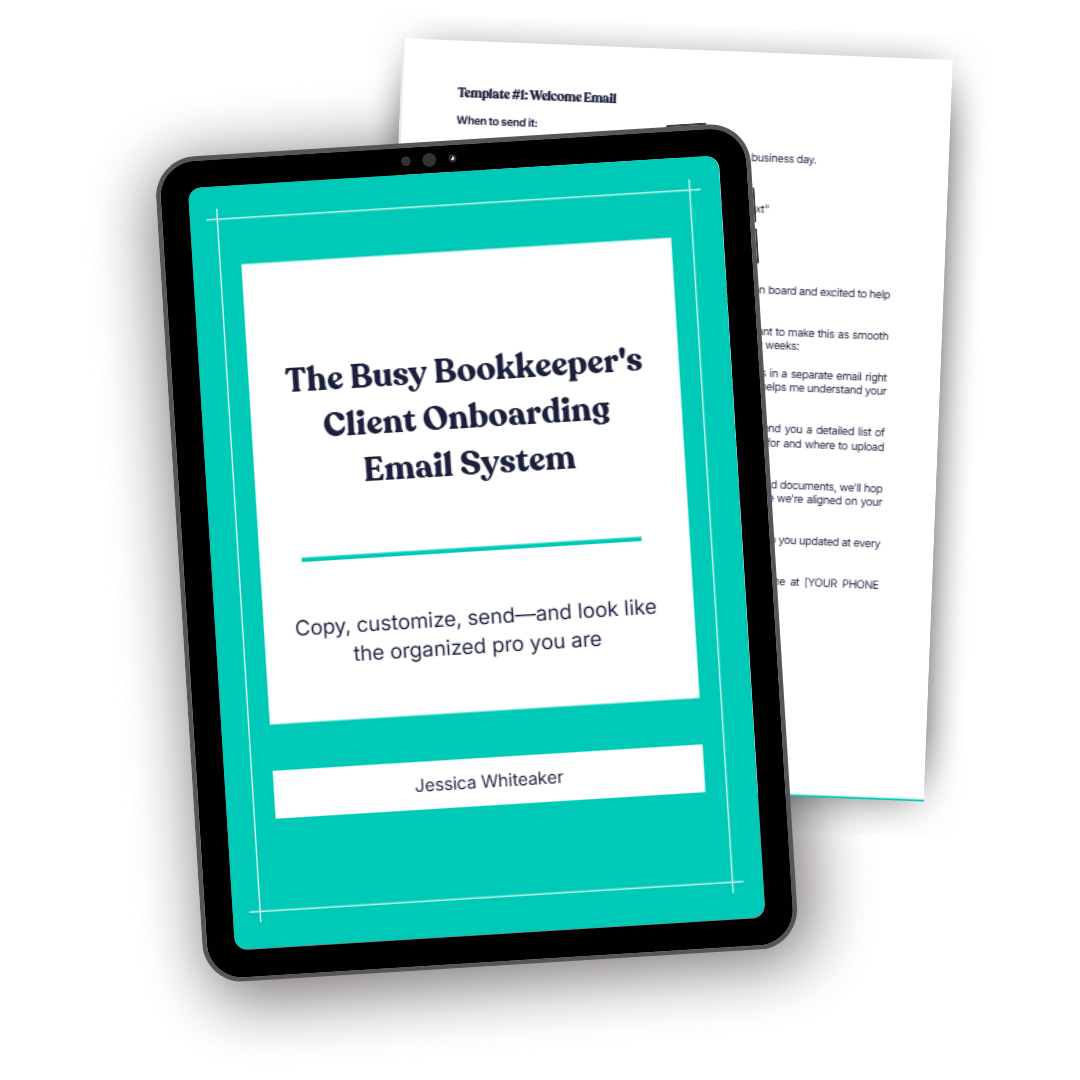
Ready to create an onboarding experience that turns clients into raving fans? Download "The Busy Bookkeeper's Client Onboarding Email System" and get the exact templates that make onboarding smooth, professional, and referral-worthy.