Why I Stopped Taking Every Client Who Could Pay
Dec 28, 2025
I have a confession. For years, my client qualification process consisted of exactly one question: "Can they pay?"
If the answer was yes, they were in. The disorganized business owner who couldn't find a single bank statement? Welcome aboard. The guy who wanted to negotiate my rate before I'd even finished explaining what I do? Sure, let's make it work. The woman who fired her last three bookkeepers and had some very strong opinions about why each of them was terrible? I figured I'd be different.
My calendar was full. My bank account looked respectable. And I spent most Sunday nights with a knot in my stomach thinking about the week ahead.
Here's what I eventually figured out: being busy isn't the same as being successful. And taking every client who could pay was quietly wrecking both my business and my sanity.
This post is about what made me finally change how I choose clients—and why being pickier actually made my business more profitable. Not in some abstract, woo-woo way. In a real, measurable, I-can-actually-see-it-in-my-numbers way.
The Real Cost of a Bad-Fit Client
Let me tell you about a client I'll call Dave.
Dave came to me through a referral, which I took as a good sign. He ran a small contracting business, needed someone to clean up two years of messy books, and was ready to pay my rate. On paper, perfect.
Within the first month, I realized Dave had a communication style best described as "radio silence punctuated by panic." He'd go weeks without responding to my questions about transactions I couldn't identify. Then he'd resurface at 9 PM on a Friday, suddenly needing everything done by Monday because his accountant was asking for reports.
I spent hours waiting for documents that never came. I rewrote emails trying to explain the same thing four different ways. I squeezed in his "emergencies" between clients who actually respected my time. When I finally calculated the hours I spent on Dave versus what he paid me, I was effectively working for less than minimum wage.
And here's the part that took me longer to see: while I was managing Dave's chaos, I wasn't available for better opportunities. I turned down a potential client because I "didn't have bandwidth." I skipped a networking event because I was buried in Dave's mess. I was so busy being busy that I couldn't see how much that business was costing me.
Bad-fit clients aren't just annoying. They're expensive. They cost you in unpaid hours, in mental energy, in the slow erosion of your confidence when you start to wonder if maybe you're just not cut out for this. And they cost you in opportunity—all the better clients and better work you can't pursue because you're drowning in someone else's dysfunction.
The Red Flags I Used to Ignore
Looking back, the warning signs were always there. I just chose not to see them.
The client who spent half our discovery call complaining about their last bookkeeper? Red flag. The one who pushed back on my pricing before I'd even sent a proposal? Red flag. Anyone who used the phrase "I just need someone to do it fast and cheap"? Enormous, flashing, neon red flag.
There were others: the ones who couldn't provide basic documents after three requests, the ones who expected me to be available at all hours, the ones who treated every question as an inconvenience rather than part of the process.
I ignored all of it. Every time.
Why? Partly fear. When you're building a business, turning away money feels reckless. What if I couldn't replace that revenue? What if this was the last client who'd ever want to hire me?
Partly imposter syndrome. I told myself that "real" bookkeepers could handle difficult clients. If I struggled, it meant I wasn't good enough—not that the client was a poor fit.
And partly, honestly, ego. I thought I could fix it. I'd be the one to finally organize their chaos, to win them over with my professionalism, to prove that I was worth more than whoever came before me.
Spoiler: I wasn't special. Difficult clients are difficult with everyone. That's why they're difficult.
What I Look for Now Instead
These days, I pay attention to completely different things when I'm talking to a potential client.
I notice whether they respect the process. Do they show up on time for our call? Do they answer my questions thoughtfully, or do they seem annoyed that I'm asking? When I explain how onboarding works, do they engage with it or immediately start asking for shortcuts?
I pay attention to how they communicate. I'm not looking for perfection—business owners are busy, and I get that. But there's a difference between someone who's genuinely slammed and someone who treats responsiveness as optional. If getting a basic question answered feels like pulling teeth during the sales process, it's not going to magically improve once they're paying me.
I listen to how they talk about money. Clients who see bookkeeping as an investment understand that good work takes time and costs accordingly. Clients who see it as an expense to minimize will nickel-and-dime every interaction. I know which kind I want to work with.
I consider whether their business is actually at a stage where they need what I offer. Sometimes people reach out before they're really ready—they're still figuring out their business model, their revenue is inconsistent, they're not sure what they need. That's fine, but it doesn't mean I'm the right fit for them right now.
Finding good clients isn't luck. It's paying attention and being willing to say no when something doesn't feel right.
How I Actually Started Saying No
Knowing I should be more selective and actually doing it are two very different things. The first few times I turned down a potential client, I felt physically uncomfortable. Like I was making a huge mistake.
A few things helped.
First, I created a simple intake process that does some filtering for me. A short questionnaire before we ever get on a call. Nothing complicated—just enough to see if someone is serious, organized enough to complete a basic form, and roughly aligned with the kind of work I do. You'd be surprised how many bad-fit clients filter themselves out when there's even a small barrier to entry.
Second, I wrote out scripts for saying no. Not because I read them word-for-word, but because having language ready meant I wasn't scrambling in the moment. Something like: "Thanks so much for thinking of me. Based on what you've shared, I don't think I'm the right fit for what you need, but I wish you the best in finding someone who is." Simple. Kind. Done.
Third—and this one was scary—I raised my prices. Not dramatically, but enough that it changed who was reaching out. Price is a filter. People willing to pay more generally value the work more. They're easier to work with because they already understand that expertise costs money.
The hardest part was trusting that space in my calendar wasn't a crisis. For a long time, an open slot felt like failure. I had to keep reminding myself that space was actually opportunity—room for the right client to show up.
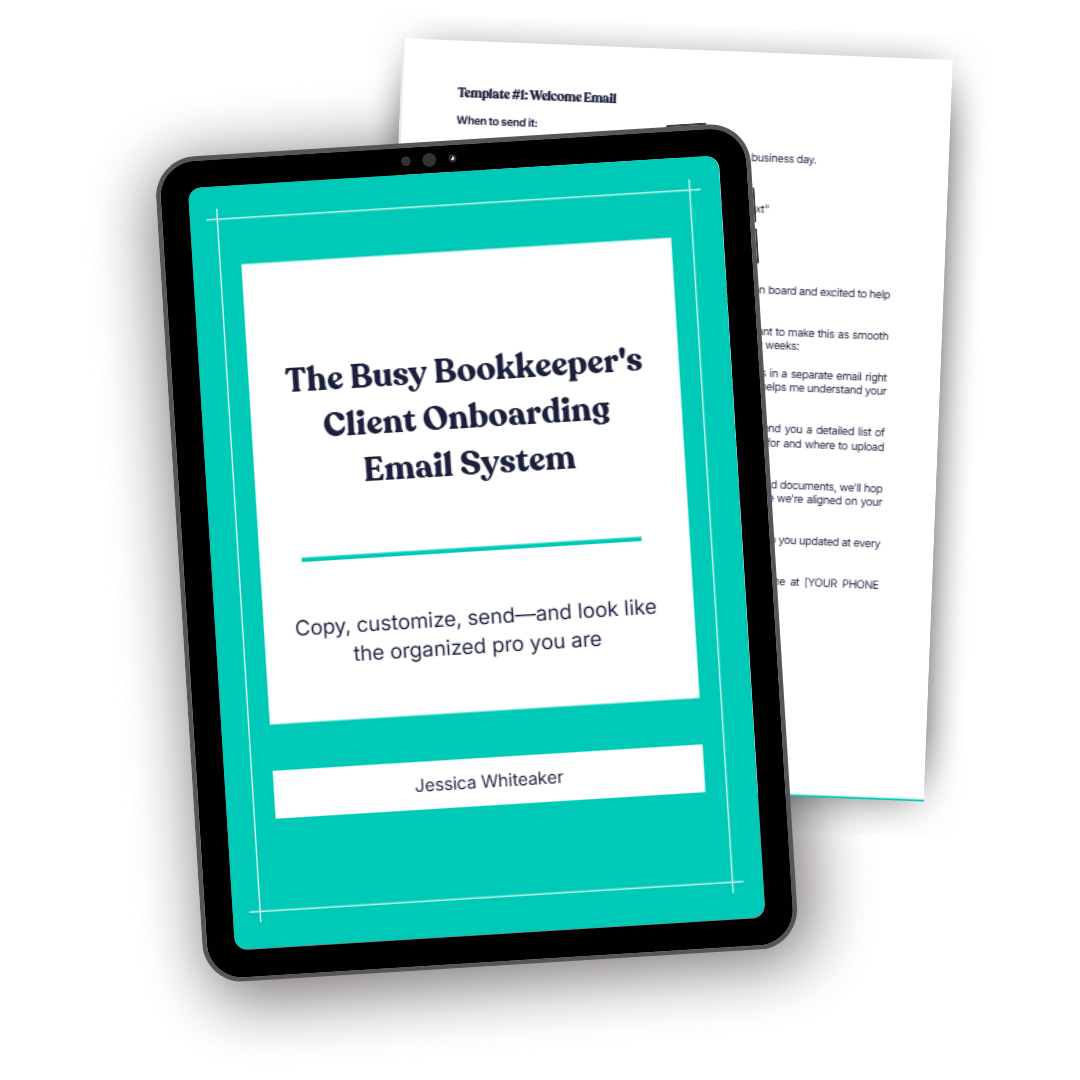
One thing that made a huge difference? Having a professional onboarding sequence ready to go. No more scrambling to write emails from scratch or wondering if I forgot to mention something important. When a new client signs on, they immediately get clear, polished communication that sets expectations and signals that I run a real operation. If you want a head start on this, I put together a free set of plug-and-play onboarding email templates—the exact emails I use to welcome new clients, request documents, and schedule kickoff calls. [Grab them here →]
What Changed When I Got Selective
The shift didn't happen overnight, but when it happened, it was significant.
I work with fewer clients now. My revenue is the same—actually a little better. That math works because I'm not leaking hours into clients who drain more than they pay, and because better clients tend to expand into additional services over time.
My clients send documents when they say they will. Not always perfectly, but close enough. I don't spend my weeks chasing people down. The back-and-forth that used to eat up hours has shrunk to almost nothing.
I don't dread my work anymore. That might sound small, but it's not. I used to feel a low-grade anxiety every time I opened my inbox. Now I mostly feel... fine? Good, even? It's a different experience entirely.
And here's something I didn't expect: good clients refer other good clients. When someone values what you do and respects how you work, the people they recommend tend to be similar. My referral pipeline improved because the people feeding it improved.
I also just feel more confident. Treating my business like it's worth protecting—like I get to decide who I work with—changed how I see myself. I'm not desperate for anyone who can pay. I'm a professional offering something valuable, and I get to choose who receives it.
The Bottom Line
I used to think being selective was a luxury for established businesses with waitlists. Something I'd earn eventually, once I'd "made it."
Turns out, taking every client who could pay was the thing I couldn't afford. Not if I wanted to actually enjoy this work. Not if I wanted to build something sustainable instead of just surviving.
If your client roster currently makes you want to hide under your desk, I'd gently suggest that the problem might not be you. It might be who you're working with.
You don't have to overhaul everything overnight. Start noticing the red flags you've been ignoring. Pay attention to how you feel after client interactions—which ones leave you energized and which ones leave you depleted. Begin building in small filters, even if it's just a questionnaire or a slightly higher rate.
The clients who are right for you are out there. But they can't find you if your calendar is already full of the wrong ones.
Ready to start building a business that works for you?
Being selective about clients is step one. Step two is having systems that set the right expectations from the very first email.
I created a free guide with three onboarding email templates you can copy, customize, and start using today. They'll help you look like the organized pro you are—and set the tone for a smoother client relationship from the start.